2 min read

LED vs. LCD Digital Displays: Which is Best For Your FI?

LED vs. LCD Digital Displays: Which is Best For Your FI?


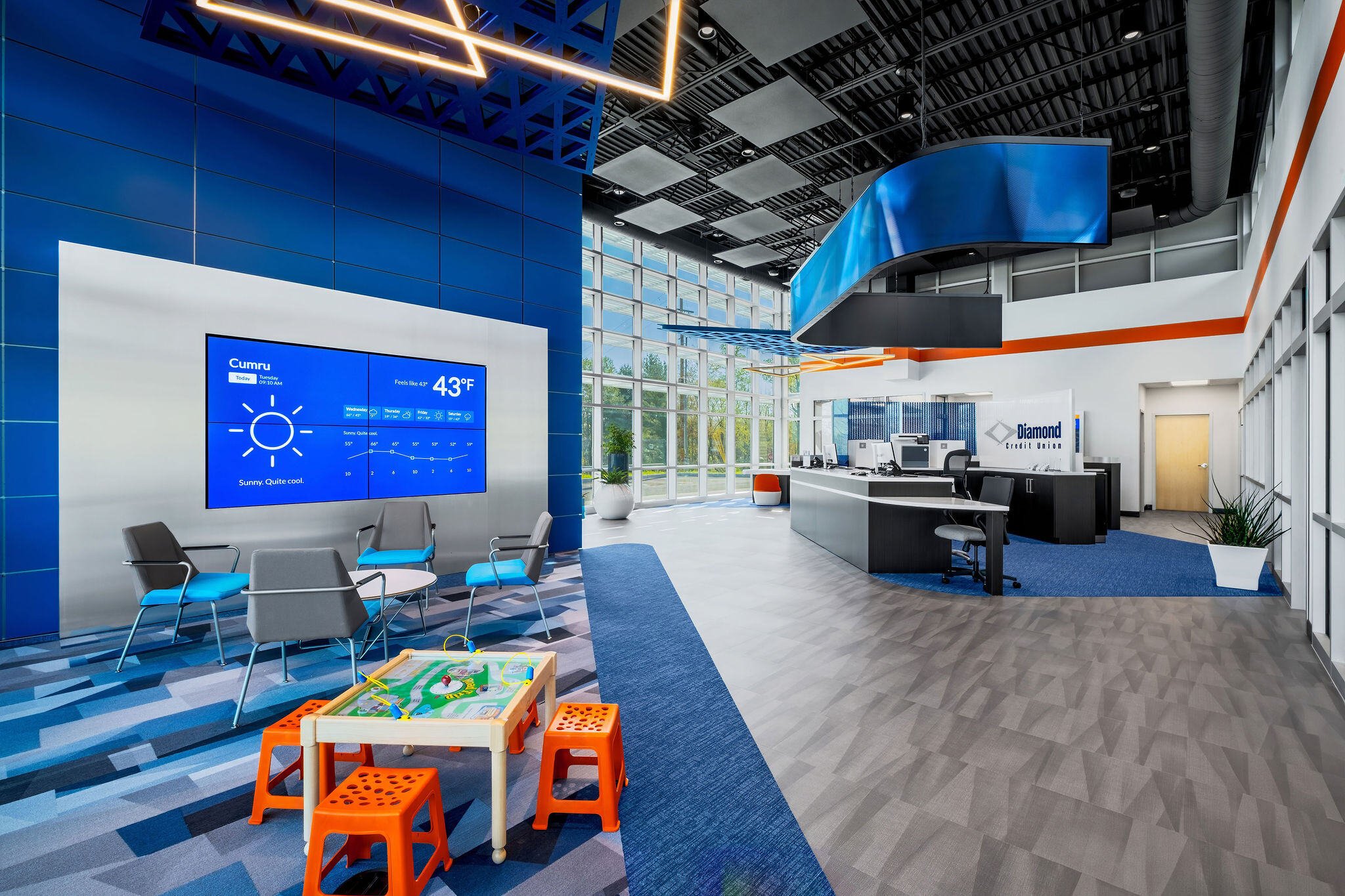
As public expectations for in-person financial services continue to evolve, making each branch visit a meaningful experience has never been more important. It is crucial to explore why digital displays or direct-view LED technology play a critical role in enhancing these interactions.

WHY DIGITAL DISPLAYS?

In a retail environment, the placement and purpose of each display should be guided by the consumer journey. Each stage of that journey defines a specific experiential goal, which in turn shapes the content that will engage and inform visitors. From there, the content requirements determine the most appropriate physical display solution, ensuring that every screen supports both the experience and the overall business objectives.


WHY LCD?

An LCD display is a flat-panel screen that uses liquid crystals and a backlight to produce clear, detailed images, making it ideal for close-range, informational, or text-heavy content in indoor environments. This is your traditional, more common display.

Pros
•    Cost-effective for most indoor applications.
•    High resolution and clarity at close viewing distances.
•    Excellent for text-heavy or detailed content.
•    Slim profile and easy to mount in standard environments.


Cons
•    Bezel lines when tiled into video walls (no seamless canvas).
•    Lower brightness compared to DvLED—less impact in bright spaces.
•    Reduced viewing angles which can affect visibility off-center.
•    Glass surface is more fragile and less durable in high-traffic areas.
•    Shorter lifespan than DvLED’s diode-based architecture.
•    Limited scalability—constrained by fixed panel dimensions.


WHY DvLED?

A DvLED (Direct-View LED) display is a modular screen made of individual LED diodes that emit light directly, creating a seamless, large-format canvas. Its flexibility in size, brightness, and color makes it ideal for high-impact visuals, artistic displays, and experiential or branded content in indoor environments, where immersive and attention-grabbing presentations are desired.

Pros
•    Seamless large format displays with no visible bezels.
•    High brightness and strong visibility in spaces with ambient light.
•    Wide viewing angles with consistent color and contrast.
•    Durable and long-lasting, suitable for high-traffic areas.
•    Highly scalable modules can be configured to almost any size or shape.
•    Precise color control and uniformity across the display surface.
•    Flexible pixel pitch allows tailoring for close or distant viewing.
•    Lower long-term cost due to reduced maintenance and longer lifespan compared to LCD walls.


Cons
•    Higher upfront cost compared to LCD panels.
•    Lower resolution at very close viewing distances if pixel pitch is large.
•    Complex installation and calibration may require specialized expertise.
•    Maintenance can be more involved, requiring module-level access.


LCD panels provide cost-effective, high-resolution options ideal for close range, detail-oriented content such as rates, schedules, or informational marketing materials. In contrast, LED displays are great for delivering large-format, high-impact content like branded visuals, artistic displays, or dynamic storytelling where seamless presentation and durability are critical. By understanding the strengths and limitations of each technology, organizations can make informed decisions that balance short-term budget considerations with long-term impact, engagement, and operational efficiency.


Top 4 Digital Display Innovations in Financial Institutions

2 min read

Top 4 Digital Display Innovations in Financial Institutions

In today’s world, it’s no secret that digital displays have become the norm. Between marketing efforts and attempts at engaging consumers with...

Read More
Finding Your Digital Signage Strategy

3 min read

Finding Your Digital Signage Strategy

As marketing tactics continuously grow and evolve, financial institutions are always looking for better ways to grab the attention of customers. One...

Read More
Is Integrated Technology Improving Financial Literacy?

Is Integrated Technology Improving Financial Literacy?

“Hints For Those That Would Be Rich” was the title of Benjamin Franklin’s financial advice column in his annual almanac in 1737. The concept of...

Read More